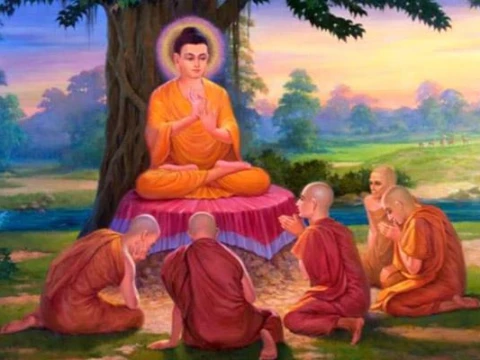
About Buddhist Circuit.The Buddhist circuit is a pilgrimage route in Nepal and India that traces key sites in the life of Lord Buddha, primarily focusing on Lumbini (birthplace), Bodh Gaya (enlightenment), Sarnath (first sermon), and Kushinagar (Mahaparinirvana). The circuit often includes Rajgir, Vaishali, Shravasti, and Sankisa in India, Nawabuddha, Bauddha Natha, and Syambhunatha in Nepal, with guided tours.About Lord Buddha:The word “BUDDHA” means “awakened” in Pali (ENLIGHTENED PERSON). The person who was awakened or achieved the KRISHNA CHAITANYA is the BUDDHA. As per Buddhist philosophy, there were 1000/1000 Buddhas in BIUHA and BHADRA KALPA, and classified in 28 groups. Out of all, Seven, as per Theravada, and Five main enlightened Buddhas' incarnations are there. So, Aarya Putra Shakya Muni is the seventh and last incarnation according to Theravada, but Mahayana claims that Gautama is the fourth incarnation, and that the fifth super-conscious Buddha, called Maitreya, has to come to earth.Shakyamuni Buddha:Lord Buddha, born Siddhartha Gautama around the 6th–5th century BCE in Lumbini, Nepal, was from the SURYA BANSHI Clan of RAMA, a dynasty called Ikshwaku. An ancient warrior of Saketa came to KapilVastu and settled their federal statehood with the other five Pali-speaking state governors, but the ancestors of the Buddha spoke Magadhi, and Lord Buddha’s Mother spoke Pali as her mother tongue.The warriors of Saket, located near Ayodhya, used to be called SAKIYA (Later spelled Shakya), and IKWAKSHU was the scaped warrior from Saket, and the king Suddodhana (The father of Siddartha Gautama) was from the same family. The mother of Lord Buddha was Maya Devi from the Palpali clan in Devdaha, who gave birth to Siddhartha Gautama (Little Buddha), holding a branch of the Ashok tree, while she was going to Devadaha. That place is called Lumbini and it’s now in Nepal. Though MATA MAYADEVI has given the Birth to Little Buddha around 567 BCE and his step mother GAUTAMI has taken care of entire his childhood in Palace of Kapilvastu.Lord Buddha, earlier name Siddartha Gautam borne as a prince who renounced his luxurious life to seek the end of human suffering. After achieving enlightenment (Nirvana) at the age of 35, he spent 45 years teaching the Four Noble Truths and the Eightfold Path, establishing Buddhism.Early Life and Royal Background· Birth: Born to King Suddhodana and Queen Maya of the Shakya clan in Lumbini, which is now in Nepal.· Childhood: The childhood and early years were spent in the palace of Kapilvastu, on caring and guidance of his stepmother, Gautami.· Prophecy: At his birth, a sage, who writes the CHINA (An astrological life predictions noted as per birth time zone.) predicted he would become either a great emperor or a renowned holy man.· Sheltered Life: To keep him away from becoming a holy man, his father kept him inside the palace, shielding him from sickness, old age, death, and the outer world filled with sorrows.· Family: He married Yashodhara and had a son named Rahul. Once he visited his family after being enlightened, Yasodhara didn’t ask him to be with his family. The Four Sights and RenunciationDespite his luxurious life, Siddhartha was curious about the outside world. On visits outside the palace, he saw "four sights" that changed his life:1. An old man: Revealing the reality of aging.2. A sick man: Revealing the reality of sickness.3. A funeral procession: Revealing the reality of death.4. A wandering monk/ascetic: Showing the path to seeking peace.· The Renunciation: At age 29, troubled by the suffering he witnessed, he left his palace, wife, and child to become a wandering ascetic in search of the truth.· Enlightenment and Buddhahood· Searching: He studied under various teachers and practiced extreme asceticism for six years, nearly starving to death.· The Middle Way: Realizing that extreme austerity was not the answer, he embraced the "Middle Way"—a path of moderation between indulgence and deprivation.· Enlightenment: He sat under a Bodhi tree in Bodh Gaya, Bihar, India, and vowed not to rise until he found the truth. At age 35, he achieved enlightenment and became the Buddha, or "The Awakened One". Teachings and Final Days· First Sermon: The Buddha delivered his first sermon in Sarnath, setting in motion the "Dhamma" (wheel of life teaching).· Core Teachings: He taught the four noble truths and the Eight Paths, focusing on overcoming desire to end suffering.· Legacy: He traveled throughout India teaching for 49 years.· Parinirvana: The Buddha passed away at the age of 80 in Kushinagar, India, leaving behind a community of followers known as the Sangha.Siddhartha Gautama, most commonly referred to as the Buddha ('the awakened one'), was a wandering ascetic and religious teacher. Buddhism is more than a religion, it’s ‘Dhamma’, an acceding Path, or a moral educational philosophy for daily human life, as I understand. The most important Places in the Buddhist circuit.Lumbini:Lumbini, the Buddha's birthplace, located in the Rupandehi District of Nepal and near the southern border, is one of the world's most important spiritual sites and attractions for Buddhist pilgrims from around the world. Lumbini, today one can visit over twenty-five Buddhist monasteries built by different nations, such as Nepal, Myanmar, Thailand, Shrilanka, China, Japan, Vietnam, and more. The Buddhist study centers, meditation centers, and the birthplace are also within the sacred Mayadevi Gardens.Mayadevi Temple is the most sacred site in the Lumbini Garden, where archaeologists have identified the exact spot where Lord Buddha was born. The inscriptions on the Ashoka Pillar nearby also refer to the spot as his birthplace. It is said that the newborn Prince Siddhartha (who later became the Buddha) took his first seven steps and delivered his message of peace to humanity here. The birth took place in the beautiful Ashok grove, which is now the focal point of the Lumbini Garden. Mayadevi, the Queen of Shakya King Suddhodhana of Kapilvastu, while passing through the Lumbini Garden, on the day of Baishakha Purnima (full moon day of May in 623 BC) to her parents' place Devagram. On the way, she took a bath in the Sacred Pond called Pushkarini. Soon after she finished her ritual bath in the pond, she gave birth to Prince Siddhartha Gautama, the little Buddha. For the higher studies of Buddhist philosophy, “Lumbini Buddhist University” is literally an educational institution at the birthplace of Lord Buddha. The 1998 Buddhist summit held in Lumbini unanimously passed a resolution to open an University for Higher Studies of Buddhism, which was implemented in 2004. That university was opened on June 17th in this year. Bodha Gaya:Bodh Gaya is a village in the northeast Indian state of Bihar, is one of the most important Buddhist pilgrimage sites, where Lord Buddha was enlightened beneath a sacred Bodhi Tree. The places to visit out there are MAHABODHI TEMPLE, where the temple premises have built a spout to mark the site where Lord Buddha was enlightened. On a direct descendant of the holy tree sites, within the premises nowadays, there are the Great Buddha Statue, the Thai Temple, the Japanese Temple, and various monasteries and sacred sites, including a lotus pond in Bodha Gaya. Sarnath:Sarnath, about 8 miles northeast of Varanasi, now in Uttar Pradesh, India near the confluence of the Ganges and the Varuna rivers. As the LALITA VISTARA SUTRA states, Lord Buddha chose a "Deer Park by the Hill of the Fallen Sages, outside of Varanasi" for his first teaching after his attained enlightenment in Bodh Gaya. The first chosen ascetics (students) - (Pancavaggiya) for his first sermon entitled Dhammacakkappavattana Sutta, by Lord Buddha were KADINYA, ASSAJI, BHAIDDYA, VAPPA and MAHANAMA in Sarnath. Later, Kaudinya became the first comprehend the teaching and attain enlightenment making him the very first disciple. Dhamekh Stupa, Wat Thai Temple, Peace Buddhist Temple, Deer park and Museum are the main attractions out Kushinagar:Kushinagar is a town, located approximately 250 Kms east of Vanarashi and approximately 197 kms. South east of Lumbini in the Kushinagar district of Uttar Pradesh, India.Kushinagar, where Lord Buddha went for Mahaparinirvana after the 81st year of his birth on the same date that is Baisakha Purnima. So Kushinagar is one of the main Buddhist pilgrimage site. Parinirvana Stupa, Kushinagar Temple, Golden Temple, Matha Kuar Shrine, Nauka Vihar, Myanmar Stupa & Temple (Burma Temple), Buddha Temple, and Buddhist Museum are the main attractions of Kushinagar.The things to know.· Best Time to Visit: October to March (cooler weather).· Tour packages cover all above mentions with accommodations, along with surface transfers and a guide.· Border Crossing: When crossing from Nepal (Sunauli) to India and vice versa, ensure you have your passport and necessary visa.· Dress Code: Modest clothing is required, particularly in temples. Rest as per your comfortable. But one must remove the shoes and sandals before entering sacred sites and monuments. Outer cases in the premises are allowed the cotton or non-leather footwear. Better to know, In the male form: Lokeshwara Avatilokeshwara PadmapaniThe group heads of Buddhism in the form of gods: DIPANKARA BUDDHA.Female form: Tara Harit Tara Neer Tara Ugra Tara The main Buddhist pilgrimage sites.· Swayambhunath, including bodhisattva Maha Manjushree temple.· Charumati Vihar· Bauddhanath· Nawa Buddha, Kavre· Avaetilokeshwar (Mokshanatha)· Pharping Monastery, Kathmandu· Golden Temple, Lalitpur· Mahabauddha Temple, Lalitpur· Halesi Mahadev, Khotang· Tyangboche monastery, Solukhumbu· Buddhist circuit. Lumbini, Nepal Bodhagaya, India Sarnath, India Kushinagar, India.Holy Mount Kailash Parikrama (Kora), Tibet,There are several other Buddhist pilgrimage sites in Nepal and its surrounding neighboring nations. The Buddhist fairs and festivals in Nepal. · Baishak Purnima is celebrated all over the Nation. Marking the birthday of lord buddha, the Enlightened Day, as well as the Mahaparinirvan day of lord Buddha.· Mahadan, offering the things to Dipankara Buddha.· Lhosar day. To mark the New Year.· Mani Rimdu, A colourful Sherpa festival, Beautiful masked (featuring mask) dance.


 (38)
(38)  100% recommend (56)
 (34)
(34)